

Prohibited Dumpster Items: What Can't Go in a Dumpster
Rules vary by city and hauler. Check before you load.
Some materials cannot go in a standard dumpster, mainly for safety and environmental reasons. Loading one can lead to a rejected pickup, an added fee or a safety issue for the hauler. Rules can vary by city and hauler, so use this list as a guide and confirm anything you are unsure about.
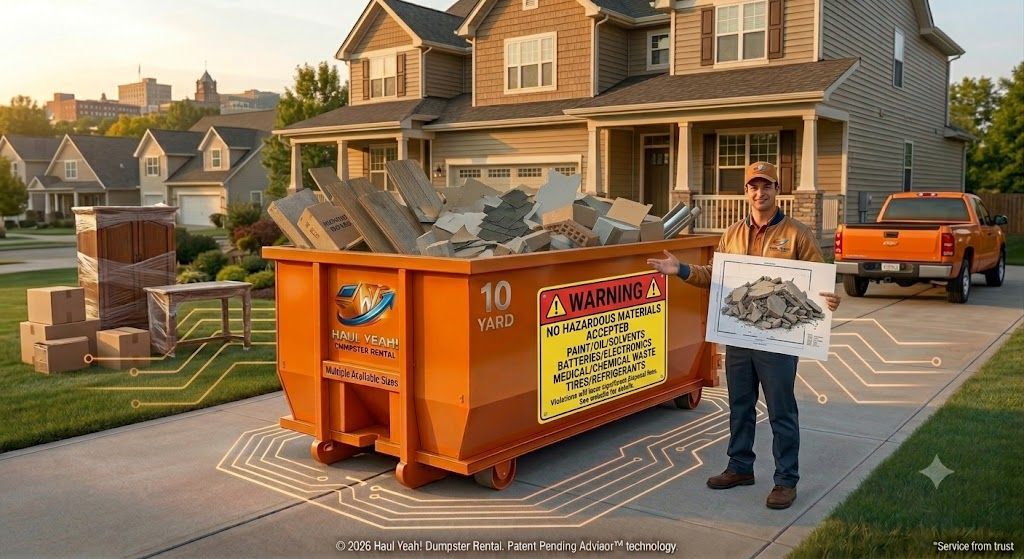
Prohibited Items by Type
These are the items haulers most commonly prohibit or restrict. Some are banned outright. Others may be accepted with special handling or an extra fee. Rules can vary by city and hauler, so your local list may be stricter or looser than this one.
| Category | Items |
|---|---|
| Hazardous materials | Asbestos, propane tanks and pressurized cylinders, explosives and ammunition, radioactive materials |
| Chemicals and fluids | Wet or liquid paint, motor oil and automotive fluids, solvents and chemicals, pesticides and herbicides |
| Electronics and batteries | Car batteries, lithium-ion batteries, certain e-waste such as CRT monitors and some TVs |
| Medical waste | Needles and sharps, medical waste, prescription medications |
| Other restricted items | Tires (often restricted or charged extra), refrigerants without removal, railroad ties, other hazardous household chemicals |
Why These Items Are Restricted
Hazardous chemicals and certain electronics need specialized disposal, and a dumpster load does not get that treatment. Batteries carry fire and environmental risk. Propane tanks carry explosion risk. Wet paint and automotive fluids count as hazardous liquids.
The rules protect the driver, the disposal facility and the environment. They also protect you from extra costs. If a prohibited item turns up at the disposal facility, you may face a special handling or removal fee, and your pickup may be delayed.
Common Problem Items and What to Do
Most trouble comes from a handful of everyday items. Here is how to deal with each one.
| Item | Dumpster status | What to do |
|---|---|---|
| Wet paint | Not accepted | Let it dry fully with cat litter or a hardener. The can and dried residue can then be disposable. Some communities also run paint programs |
| Tires | Often restricted or charged extra; some haulers refuse them | Try a tire retailer or recycling facility |
| Batteries | Most types prohibited, including car and lithium-ion | Retailers and hardware stores often offer drop-off recycling |
| Propane tanks | Prohibited | Retailers may exchange tanks, and some municipal programs accept them |
| Refrigerators and air conditioners | Not fully prohibited | Refrigerant must be removed first. See the accepted items guide |
Where to Take Prohibited Items
Prohibited does not mean you are stuck with it. Most communities offer another way to get rid of these materials. Your city or county waste management department is the best place to start, because it can tell you what is available near you.
- Household hazardous waste events for chemicals and similar materials.
- Electronics recycling drop-offs for e-waste.
- Specialized facilities for tires and batteries.
- Retailer take-back and exchange programs for batteries, tires and propane tanks.
A Few Things to Know Before You Load
Follow these rules to stay out of trouble at pickup.
- If you are unsure about an item, check with your local hauler before you load it.
- Confirm tire and appliance policies with your hauler ahead of time.
- Rules can vary by city and hauler, so a rule that applied on your last job may not apply on this one.
- Keep prohibited items out of the dumpster even if there is room for them. Removal costs can land on your bill.
Questions
Can I put wet paint in a dumpster?
No. Letting it dry fully with cat litter or a hardener can make the can and residue disposable. Some communities offer paint programs.
Can tires go in a dumpster?
They are often restricted or charged extra, and some haulers do not accept them. Try a tire retailer or recycling facility.
Can I throw away batteries?
Most types, including car and lithium-ion, are prohibited because of fire and environmental risk. Retailers and hardware stores often offer drop-off recycling.
Why are propane tanks prohibited?
They are an explosion risk. Retailers may exchange them, and some municipal programs accept them.
What happens if I put a prohibited item in a dumpster?
You may pay a special handling or removal fee, and your pickup may be delayed.
Where can I take prohibited items?
Try household hazardous waste events, electronics recycling and specialized facilities. Your city or county waste department can point you to local options.
Ready to rent a dumpster?
Check local pricing and availability for your address.