

Shed Removal Dumpster Rental
Sized to your shed's footprint and what it sits on.
Most sheds fit in one dumpster. The question that changes the plan is what the shed sits on. A shed removal dumpster rental in a 10 yard handles most 8x10 to 10x12 sheds, while larger builds or a concrete pad may need a 15 yard.
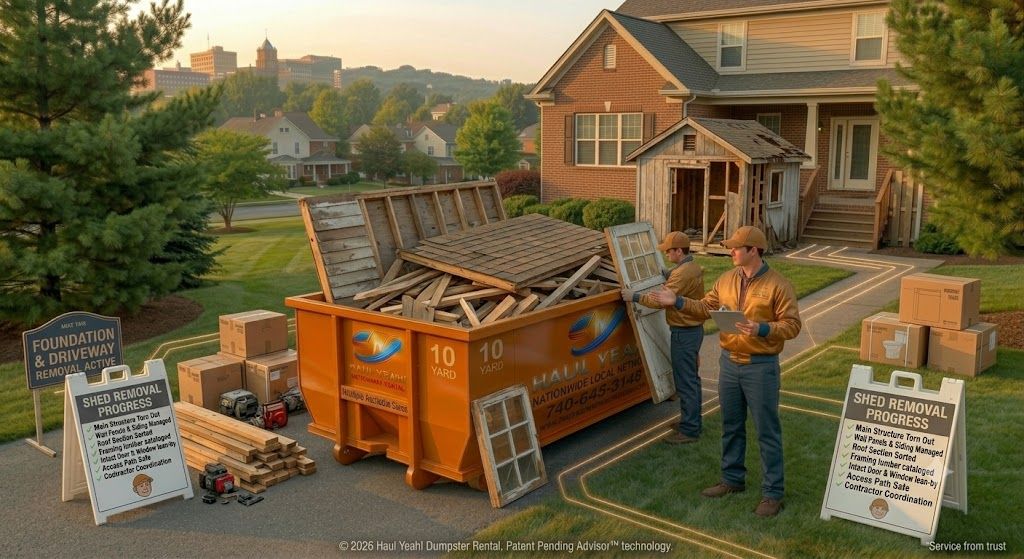
Footprint and Foundation Decide the Size
Start with the shed's dimensions. A 10 yard usually takes a whole standard shed once it is broken down. A 10 to 12 yard rental typically runs $300 to $400, depending on location, size, and rental length, and a 14 to 18 yard typically runs $350 to $500. Advisor sizes the job based on shed footprint and foundation type.
The foundation is the swing factor. A shed on skids leaves very little behind. A concrete pad adds both weight and volume, and it may need to be broken up separately.
8x10 to 10x12 on Skids
A 10 yard is the usual fit. Walls, roof, floor, and skids all go in one load.
Larger Shed
Step up to a 15 yard when the footprint runs past the standard range.
Concrete Pad
Plan for a 15 yard or separate handling. Concrete adds weight fast, so bring it up at booking.
What Comes Out of a Shed Teardown
Empty the shed first, since the contents are usually a separate load of tools and junk. Then the structure itself breaks down into these materials. Metal siding and roofing are generally accepted, but check the accepted items guide for anything you are unsure of.
- Wall panels and siding
- Roofing material
- Framing lumber
- Doors and windows
- Flooring
- Skids or base framing
- Metal siding or roofing
Tear It Down Yourself or Hire It Out
Small skid-based sheds are often a homeowner job. You can take off the roof, then panels, then the frame, and feed it into the dumpster as you go. Larger sheds, or those with electrical service or a concrete pad, may suit a contractor better.
If the shed has power, get that dealt with before anyone starts pulling walls. A hired crew can also advise on breaking up a pad, or on whether a concrete disposal plan makes more sense than loading it with lumber.
Backyard Access and Timing
Sheds usually sit toward the back of a property, so the dumpster often goes in the backyard or side yard. Tell the hauler where the shed sits relative to your yard access, and confirm the truck can get there. If it cannot, plan on carrying panels to the nearest good spot and break them down small enough to manage.
The standard window is 7 to 10 days, and many haulers offer daily extensions. That is plenty for a typical shed, but plan extra time if you are removing a pad too.
Questions
Will a 10 yard fit a whole shed?
Usually, yes, for standard sheds from 8x10 to 10x12. Larger sheds may need a 15 yard.
Does the shed's foundation affect dumpster size?
Yes. Skid-based sheds leave less debris, while concrete pads add weight and volume.
Can metal siding or roofing go in the dumpster?
Generally, yes. Check the accepted items guide for materials you are unsure about.
Can I tear down a shed myself?
Often, for small skid-based sheds. Larger sheds, or those with electrical or a concrete pad, may need a contractor.
Where does the dumpster go for a shed removal?
Usually in the backyard or side yard. Confirm truck access with your hauler before delivery.
Can I put a concrete shed pad in the dumpster?
It may need to be broken up separately. Tell your hauler about the pad at booking so the plan covers its weight.
Ready to rent a dumpster?
Check local pricing and availability for your address.